
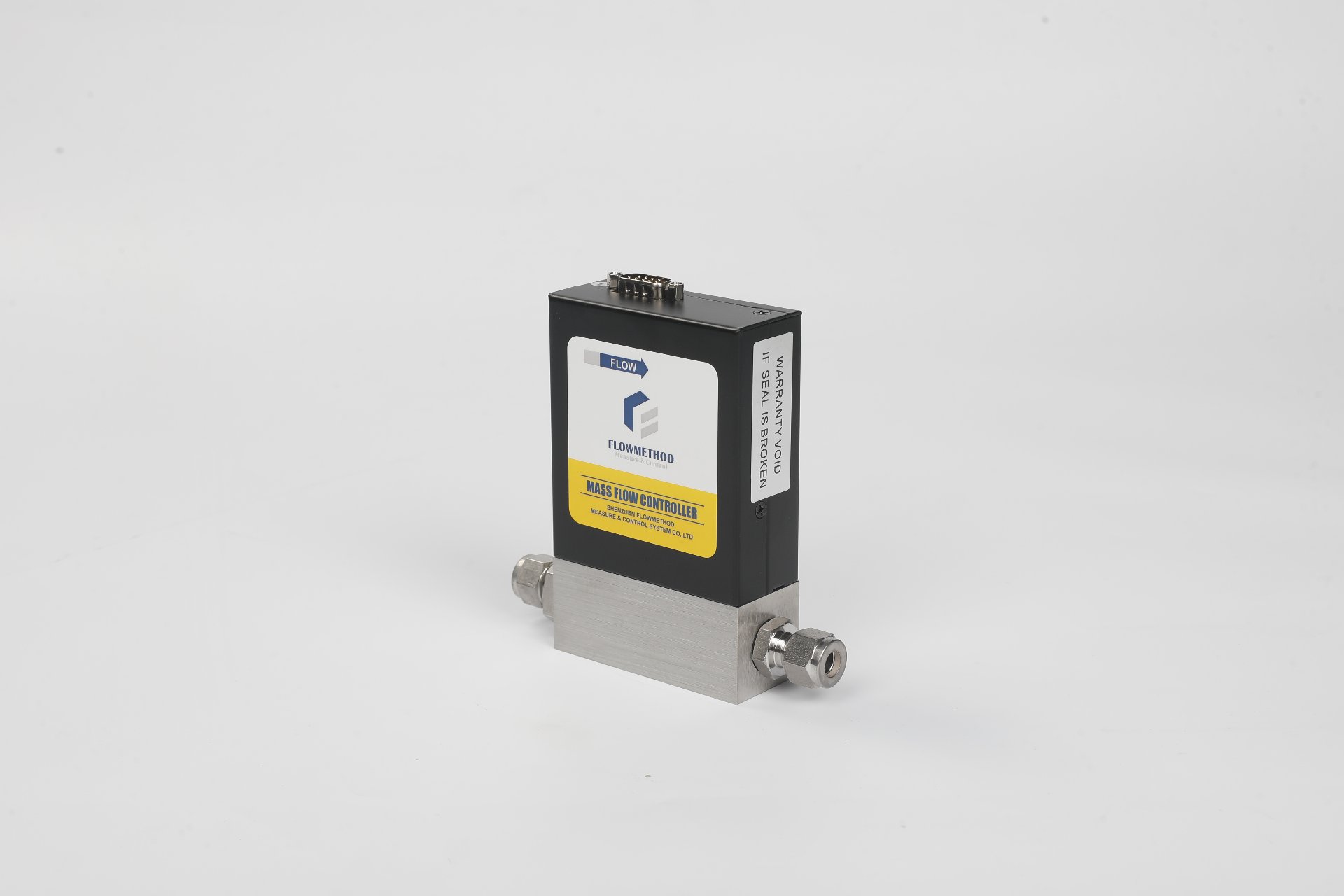
When gas supply, leakage checks and settings appear correct but readings still disagree with the reference, installation may be the cause. Tilting an instrument, reversing the gas direction, or mounting it near vibration or heat can affect thermal flow measurements. Follow the actual model's requirements rather than treating an MFC as a device that can be placed in any position.
1. Why orientation can affect a thermal instrument
A bypass thermal sensor compares temperatures along a small gas passage. Its calibration relationship is established for specified conditions, including the mounting orientation.
Gravity-driven convection: changing orientation can alter the temperature distribution around the sensing elements and create an output shift unrelated to actual flow.
Thermosiphon effects: in some vertically mounted designs, heating can cause circulation even when there is no intended through-flow. A zero adjustment must not be used to hide an unapproved installation condition.
Reversed connections: use the flow-direction arrow on the body. Reversed inlet and outlet connections can cause incorrect operation or damage, depending on the design.
Orientation sensitivity differs among instruments. Some support multiple positions; others need a specified orientation or calibration for the intended position. The model manual and manufacturer confirmation take precedence.
2. Five orientation checks
- Use the specified mounting position. Confirm horizontal or vertical installation and the required direction of gas flow. Retain the agreed orientation after relocation.
- Align gas flow with the arrow. Check before connecting the tubing.
- Recheck zero after relocation or reorientation. Establish genuine no flow and stable temperature. Investigate thermally induced shifts before changing zero.
- Keep service and calibration orientation consistent. Tell the service engineer how the instrument is used and reinstall it in that position.
- Discuss unusual positions before ordering. If space requires vertical, inverted or angled mounting, confirm suitability and calibration in that agreed position before delivery.
3. Location and environment
- Keep the instrument away from significant vibration and heat sources.
- Consider flow disturbances from closely coupled bends and valves. Use the straight tubing and inlet arrangement required for the actual model.
- Size tubing for the required flow and acceptable pressure loss, especially at high flow.
- Leave access for reading, wiring, inspection and removal.
Two common installation problems are electromagnetic switching equipment close to the signal wiring, causing irregular readings, and changing a previously horizontal installation to vertical without checking the calibration requirements. Both can look like sensor failures even though the root cause is the installation.
4. Before-and-after checklist
Before installation: verify gas, calibrated range and inlet/outlet pressure conditions on the nameplate; confirm wetted-material and seal compatibility; clean and purge the gas path; provide suitable upstream filtration; and confirm any special mounting position agreed on the order.
After installation: assemble fittings to their own instructions; isolate and depressurize before adjustment; complete an approved leak test; establish pressure gradually to avoid shock; follow the specified warm-up time (often 15–30 minutes for thermal instruments); and compare command and feedback for an MFC before handing it to production. For an MFM, validate the measured reading instead.
A drawing showing the mounting position and nearby piping helps the manufacturer assess unusual installations before purchase.
For selection, installation or technical enquiries, contact Flowmethod: Mr. Dou, +86 180 3818 3381; doufeijin@hotmail.com. See Contact for the full contact list.