
Dehydroxylation is important in producing high-purity quartz sand, crucibles, tubes and related quartz components for semiconductor and photovoltaic applications. The process reduces silanol groups (Si–OH) associated with the quartz material. Hydroxyl content can affect high-temperature properties and component life.
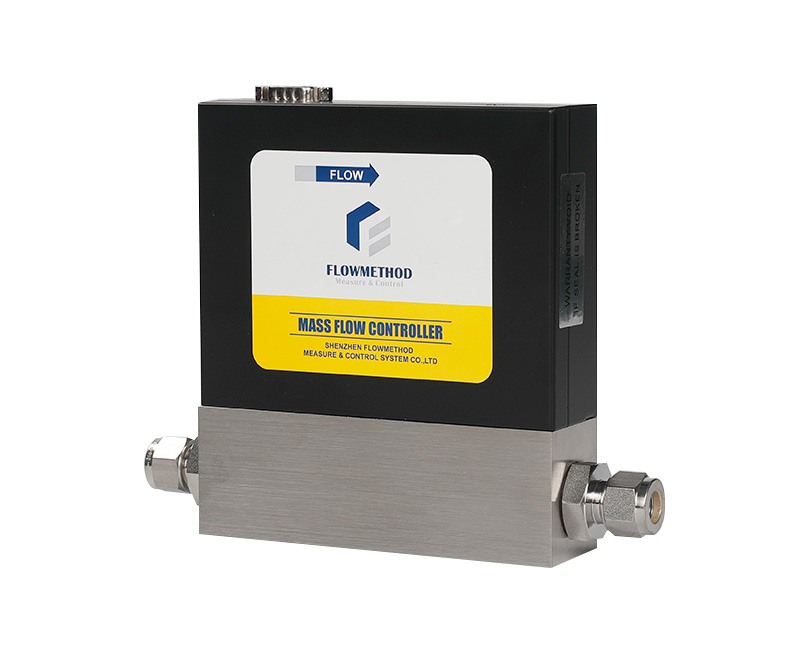
Temperature profiles may be carefully controlled while purge-gas delivery still relies on manual adjustment. A mass flow meter can report flow but cannot hold it at a target. A mass flow controller adds automatic regulation, turning purge-gas delivery into a defined and recordable process quantity.
1. The traditional gas path
A simple arrangement is gas cylinder → regulator → manual needle valve or rotameter → furnace. Operators adjust the valve based on experience and the float reading. Some keep flow high to provide an operating margin, then change the setting after inspecting the finished material.
This can be practical for small, steady batches, with low cost and little electrical integration. Its limitations become more apparent in continuous or multi-zone furnaces and processes requiring tighter batch consistency.
2. Five limitations of manual adjustment
The reading is an approximation to the process quantity. A volumetric reading depends on its gas, pressure, temperature and calibration basis. The same float position need not mean the same mass flow under different conditions.
Results depend on the operator. Different staff, shifts, material loads and production pressures can lead to different settings. Heating, holding and cooling stages may all use the same valve position even though their purge requirements differ. The manual adjustment is difficult to define and reproduce.
No automatic link to moisture removal. Too little purge can leave an unfavorable moisture environment; too much can increase gas consumption and affect heat transfer. Manual flow control alone does not measure or control water-vapor concentration.
Little information for diagnosis. If hydroxyl content or crystallization differs between batches, the actual gas history may be unavailable, making diagnosis a new round of trial and error.
Multiple zones are difficult to coordinate. Several independent manual valves and rotameters require repeated checks and do not provide unified supervision.
3. What an MFC changes
An MFC makes gas delivery settable, reproducible and recordable, within its rated conditions:
- Mass-flow-based setting and automatic regulation. A standard-volume flow unit such as SLPM represents a defined amount of gas at the agreed reference conditions. The controller adjusts its valve as conditions change within the specified operating envelope.
- Temperature-profile coordination. Compatible 0–5 V or 4–20 mA interfaces can connect controller commands to a PLC or temperature-control system, allowing different gas targets in heating, holding and cooling stages.
- Independent zones with centralized observation. Each zone can have its own controller and setpoint, while measurements are monitored together.
- Traceability. Suitable RS485 / Modbus RTU communication and software can record each furnace's gas-flow history for abnormal-batch investigations.
- Several flow bands. FL-802 covers 0–10 SLPM, FL-803 10–50 SLPM, FL-805 50–200 SLPM, and FL-807 200–1000 SLPM nitrogen-equivalent selection bands. The actual calibrated range still needs to fit the process. If a channel only needs monitoring, use a corresponding meter rather than paying for unused regulation.
Automatic flow control is not the same as a closed loop on furnace moisture or hydroxyl content. Those quantities need their own measurements if the process requires direct feedback.
4. Potential operating benefits
- A documented setpoint reduces dependence on a particular experienced operator.
- Recorded gas delivery helps compare batches and separate gas effects from temperature, load and other variables.
- Gas use can follow the validated process requirement rather than a permanently oversized manual setting.
- New loads or furnace conditions can be tested through recorded parameters instead of unrecorded valve positions.
- Historical curves support fault investigation.
- Additional channels can support scale-up, subject to the revised furnace and gas-path design.
The size of these benefits depends on the process and should be verified in application testing.
5. Five selection checks
- Range: where practical, keep normal flow around 20–80% of the ordered full scale.
- Interface: analog signals can suit PLC coordination; RS485 can suit multi-device monitoring. Confirm the host and software functions.
- Wetted materials: 316L stainless steel is a common option, but seals and every wetted component still need checking against the actual gas and cleanliness requirement.
- High-temperature sections: valves and piping near the furnace need their own temperature ratings and installation confirmation. A room-temperature flow instrument must not be assumed suitable for furnace temperatures.
- Upstream conditions and differential pressure: provide dry, clean gas and the pressure conditions required for the controller to achieve its specified performance.
The objective is a reproducible furnace atmosphere, not merely a high temperature. Replacing a manual flow adjustment with an appropriately configured MFC makes one important process variable easier to manage and trace.
For selection, installation or technical enquiries, contact Flowmethod: Mr. Dou, +86 180 3818 3381; doufeijin@hotmail.com. See Contact for the full contact list.