
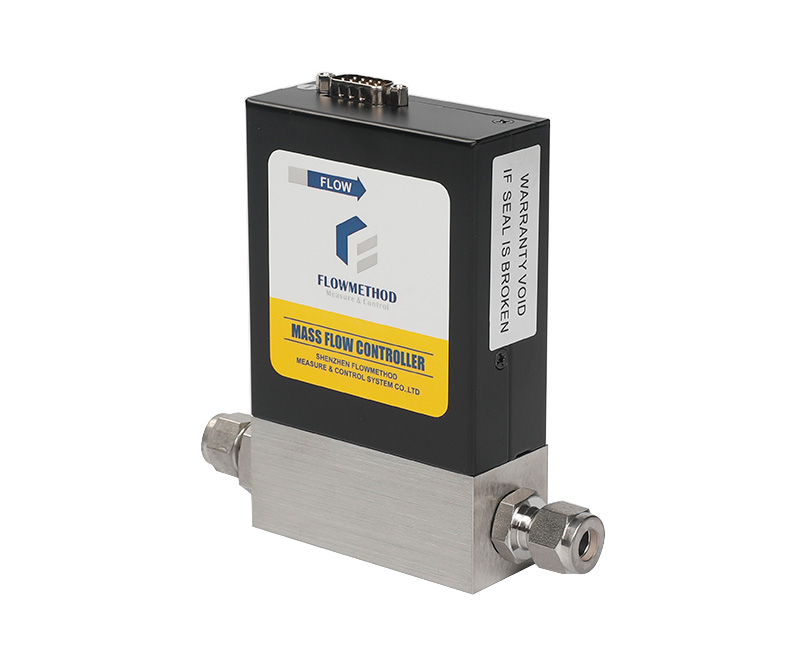
Searching for a “gas mass flow meter manufacturer” produces rankings, advertisements and claims of reputation. They can help identify candidates, but they do not establish which supplier will perform best in your process. A dependable partner is found by checking the actual operating requirements. This guide turns supplier comparison into a practical scorecard.
1. Use rankings to build a shortlist, not make the purchase
Rankings have three limitations: the coverage and selection method may be unclear; visibility may reflect advertising rather than performance; and a good high-flow product does not necessarily suit a very low-flow application. Use search results to shortlist three to five suppliers, then assess them against your own specification.
2. Write one operating-condition sheet first
Prepare six groups of information: gas composition and compatibility; minimum, normal and maximum flows; inlet/outlet pressure and differential-pressure window; analog or RS485 / Modbus RTU interfaces; local-display needs; and installation space and fitting requirements.
For nitrogen-equivalent operating points of 8, 45 and 120 SLPM, the website's series bands lead to FL-802 (0–10 SLPM), FL-803 (10–50 SLPM) and FL-805 (50–200 SLPM). For 200–1000 SLPM, consider FL-807. Convert other gases before using these bands. The actual ordered full-scale range must still fit the operating points.
For a normal flow below 0.5 SLPM, ask how the instrument will be calibrated and sized for that flow rather than using a large range at its lower end. Examine both low-flow and high-flow capabilities and continuity between ranges. If other branches need regulating or isolation valves, confirm their compatibility too: obtaining coordinated instruments, signals, connections and spares can simplify the complete system.
3. Stage one: pass/fail qualification gates
These are gates, not weighted scores. A failure should not be offset by a low price or good marks elsewhere.
| Gate | Evidence to request |
|---|---|
| Operating-condition fit | A proposal covering gas compatibility, wetted materials, seals, temperature, pressure and cleanliness—not merely a model number |
| Required flow coverage | Suitable minimum, normal and maximum operating points, including low- and high-flow cases |
| Required documentation | Agreed unit-specific calibration data, material documentation, wiring and protocol information |
| Required delivery date | A commitment against the actual project date, not just a general lead-time claim |
Confirm which documents and tests are required by your procurement specification. After the gates are passed, the substance of the technical proposal is assessed again when comparing configuration and custom engineering.
4. Stage two: a six-dimension weighted scorecard
Use the same scoring scale for each supplier and retain the evidence behind every score. The following weights are a suggested purchasing tool, not an industry standard:
| Dimension | What to assess | Standard products | Some customization | Mainly custom work |
|---|---|---|---|---|
| Price and configuration | Like-for-like value and included scope | 40% | 30% | 20% |
| Quality control | Unit calibration, retained data and reference comparison | 20% | 20% | 20% |
| Product coverage | Range continuity and actual manufacturing responsibility | 15% | 15% | 15% |
| Custom-engineering response | Feasible design and validation of nonstandard requirements | 5% | 15% | 25% |
| After-sales support | Response, warranty and spare availability | 10% | 10% | 10% |
| Delivery reliability and stock | Regular supply and a credible urgent-order path | 10% | 10% | 10% |
Each column totals 100%. Quality, coverage, support and delivery retain the same weights. As custom engineering becomes more important, its weight rises by 10 percentage points while price/configuration falls by the same amount—from 40% to 20%. Price remains meaningful even in custom projects, where design and prototype charges need clear discussion.
Decide which column fits the purchase
Ask three questions:
- Is the gas conventional, or corrosive, condensable or subject to special cleanliness controls?
- Do the operating points fit a routine range, or extend toward very low or very high flows?
- Are special connections, wetted materials, mixing channels, signals or display/software functions needed?
If a nonstandard condition needs engineering work, use the customization column appropriate to its scope. A familiar model name can still conceal an order-specific range, gas calibration or material configuration. Assess the actual work, not only the catalogue designation.
Compare price in one consistent way
Either align every supplier to one configuration and compare price, or compare configuration value within a similar price band—the original guide suggests about 15% as an example. Do not switch methods mid-comparison.
Break quotations into range, wetted materials, signals, display, cable/fitting scope, calibration reports, certificates, warranty and spares. Include lifetime costs: actual-gas recalibration, replacement seals and filters, service intervals, spare availability and downtime.
If a price is unusually low, ask what is excluded or different. A cheaper quotation may use a different calibration process, material, report scope or service arrangement. Do not infer poor quality solely from the price; obtain evidence.
Evidence for each dimension
- Price/configuration: itemized, aligned quotations plus lifecycle costs.
- Quality control: individual calibration records, traceable reference data and material information linked to the supplied units or batch.
- Coverage: which products are designed/manufactured by the supplier and which are externally sourced; how that affects quality and delivery responsibility.
- Customization: a concrete nonstandard requirement, followed by an explanation of design, feasibility and factory verification.
- Support: agreed remote response, on-site arrangements where relevant, warranty terms and replacement/spare availability.
- Delivery: standard lead times, stock arrangements and evidence of how urgent orders are handled.
Score the shortlist using those records rather than subjective statements such as “good reputation.”
5. Verify calibration methods and delivered reports
Flow instruments may be built and calibrated to order. A free trial unit is not always available or economical; if application testing is needed, agree the sample or validation arrangement explicitly. At minimum, examine the calibration method and the data supplied with each ordered instrument.
Unit-specific factory calibration
Confirm how each unit is tested against a suitable reference, which flow points and operating conditions are covered, and how results are retained. A batch sample is different from an individual calibration. For a custom specification, request evidence that the agreed special conditions are included where applicable.
A “passed” statement without the required data is insufficient for data-based acceptance; request the agreed report. It does not by itself prove that the manufacturer used sampling rather than individual testing.
The report you receive
Check three things:
- The instrument serial number matches the report/data identifier.
- Model, range, gas, material and interface match the order.
- The measured deviations meet the stated acceptance limits at the relevant points.
Where applicable, inspect results from several units for consistency and examine repeated results rather than only a best reading. Retain the records as a baseline for later recalibration, replacement or drift diagnosis. Before installation, also confirm mounting, gas cleanliness and piping requirements.
Actual-process-gas calibration
Many instruments use nitrogen-based calibration with gas-factor conversion. If the process gas differs significantly or the accuracy requirement is tight, discuss actual-gas calibration. Confirm feasibility, safety, gas supply, charges, lead time and report scope before ordering.
A common accuracy example is ±1% FS, but the ordered class governs acceptance. Compare unit-to-unit behavior and repeatability on the stated basis. For an incoming check, repeat the normal operating point—for example 30.0 SLPM, morning and afternoon over three days—under controlled conditions and compare with the delivered records. This is a suggested application check, not a replacement for a traceable calibration procedure.
6. Custom engineering: configure for the process
A change in process conditions can alter the required range, fittings, signals, materials and cleanliness. Evaluate custom capability through three questions:
Does the supplier first accept and analyze the operating conditions? Provide the complete gas, flow, pressure, temperature, signal, display and installation information. A credible response explains a suitable range, materials, seals and installation—not just a familiar model number.
Does the custom requirement enter the verification plan? A custom instrument is not only a changed exterior. Confirm how the agreed special specification will be checked in the delivered unit's factory tests, alongside routine requirements.
Are cost, schedule and approval defined before production? Distinguish standard options from custom development, agree drawings/specifications where needed, and identify engineering charges, lead time and acceptance conditions.
The value of customization is closing the gap between a catalogue product that only partly fits and an instrument that meets the actual process.
7. Documentation and spares
Agree the documentation package before contracting: individual calibration data and reference comparisons, required material certificates, wiring diagrams and compatible communication/register information. Include the signed custom specification where applicable. Missing documentation can delay acceptance or audit work even when the instrument functions.
A suggested starting point for spares is around 5% of installed units. For 24 online instruments, one or two appropriately configured spares may support fault replacement. Adjust this to failure risk, delivery time and the cost of downtime.
For corrosive service, verify the spare's actual wetted materials and seals. Similar model codes do not necessarily mean interchangeable gas compatibility.
8. Compare the same configuration
Flow range is expressed on a calibration-gas basis; for the website's selection bands, that is nitrogen equivalent. High-flow devices may need a larger valve and actuator, while very-low-flow devices can require finer passages, tighter tolerances and careful leak/dead-volume control. Costs at the extremes can differ from common middle-range products. These are cost drivers, not a universal price law.
The original guide uses 0–100 SCCM as a low-flow example and flows of tens to hundreds of standard L/min as higher-flow examples. Do not enlarge the ordered range simply to reserve hypothetical capacity: normal flow around 20–80% of full scale often offers a better compromise.
Ask every shortlisted supplier to quote the same range, signal, display, cable length, fittings and calibration scope. When quotations differ substantially, review the specification line by line before treating the figures as comparable.
9. Three mistakes to avoid
Treating “the best manufacturer” as one fixed answer. A supplier suitable for a high-flow process may not be the best fit for a small-flow or special-gas application. The operating-condition sheet comes before the ranking.
Comparing purchase price alone. Calibration, maintenance, spares and downtime affect total cost. A 10% price difference can be outweighed by an additional production interruption.
Ordering from a ranking without technical checks. Search results produce candidates; they do not replace confirmation of the medium, flow, pressure and temperature requirements.
A useful supplier is the one whose configuration fits, whose accuracy is sufficient, whose quality is traceable, and whose overall cost meets the budget. Excess capacity and unused features waste money; removing essential quality or calibration to save a little can also be expensive. Complete the condition sheet, gates, scorecard and report checks before deciding.
For selection, installation or technical enquiries, contact Flowmethod: Mr. Dou, +86 180 3818 3381; doufeijin@hotmail.com. See Contact for the full contact list.